
Real projects. Measured results.
Case studies in Industrial IoT, Edge AI and trading systems
From factory floors and power distribution panels to AI inspection lines and trading engines, here is what we built, how we built it and what changed for our clients.
$ kelectron --results
downtime−22% in the first 60 days (IoT monitoring)
cabling−40% cost with a fully wireless rollout
peak load−18% after real-time energy visibility
inspection99.3% AI accuracy, < 200 ms per part
trading0 downtime in 90 days of live trading
→ reported on client projects, see details below
Case study 01 ·
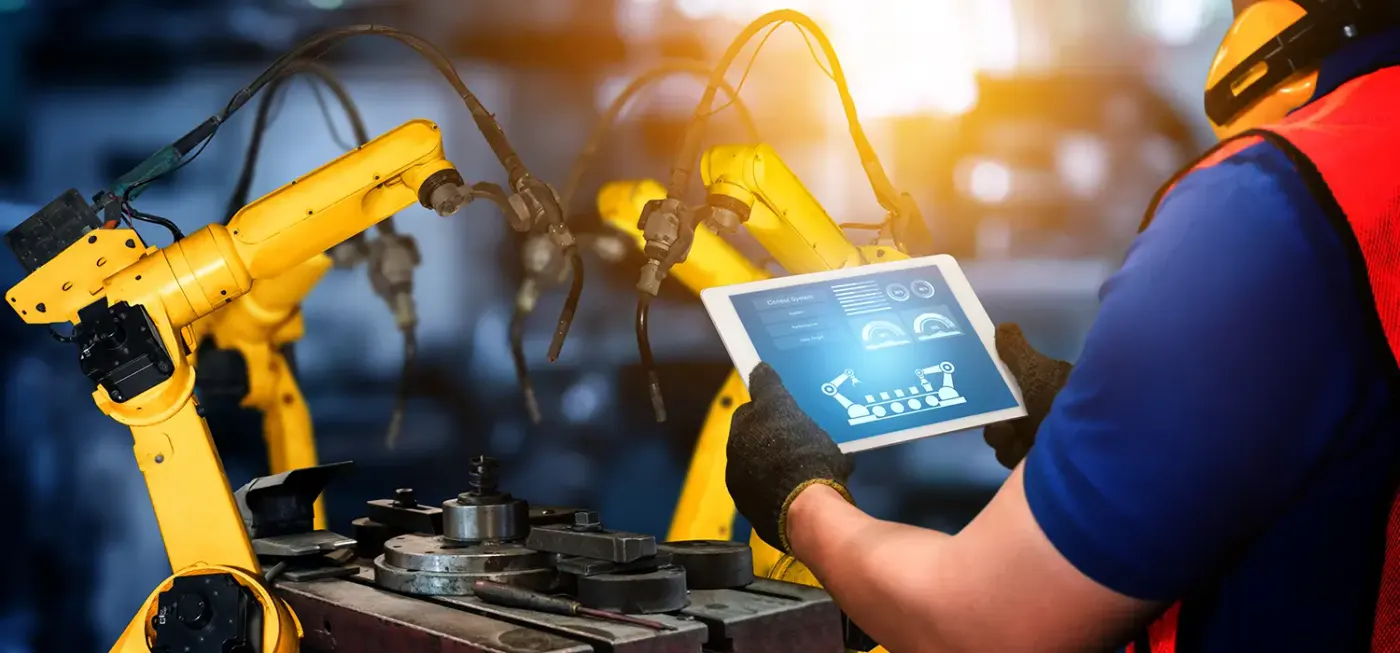
Industrial IoT Solution for Smart Manufacturing
Real-time visibility and analytics across machines, environment, and energy—powered by LoRaWAN and Wi-Fi.
- Industrial IoT
- LoRaWAN
- Manufacturing
Project overview
A multi-line manufacturing facility sought to digitize its operations by capturing real-time data from machines, electrical panels, and the shop-floor environment. They wanted to monitor machine health, ambient conditions, and energy usage to improve efficiency and reduce downtime.
- 22%less machine downtime in 60 days
- 40%lower cabling cost
- 30+sensor nodes on 2 shop floors
Problem statement
- No centralized visibility into machine runtime, fault states, or power spikes.
- Manual tracking of temperature, humidity, and vibration data was inconsistent.
- Maintenance was reactive, leading to unplanned downtime.
- Existing wired solutions were costly and inflexible for plant layout.
- Needed scalable, wireless IoT with real-time alerts and dashboards.
Results & Benefits
- Reduced machine downtime by 22% in first 60 days
- Energy optimization strategies identified via load trend analytics
- Enabled predictive maintenance by correlating vibration + temperature spikes
- Fully wireless deployment reduced cabling cost by 40%
- Operators and managers now access data remotely via mobile dashboard
Our Solution: LoRaWAN + Wi-Fi Enabled IoT System
Kelectron designed a hybrid Industrial IoT (IIoT) system using LoRaWAN for long-range data capture and Wi-Fi for high-throughput nodes like energy meters.
| Module | Technology |
| Sensors | Vibration, temperature, humidity, current, voltage, RPM sensors |
| Connectivity | LoRaWAN (for remote, low-power devices), Wi-Fi (for real-time energy data) |
| Gateways | Multichannel LoRa gateway + Raspberry Pi edge node |
| Backend | MQTT Broker + Python FastAPI + MongoDB |
| Dashboard | Custom web dashboard + charting + alert engine |
Implementation Highlights
- Deployed 30+ nodes across 2 shop floors
- Designed custom low-power sensor nodes with STM32 and ESP32
- Data transmitted every 10s–60s depending on criticality
- Set up LoRaWAN network server and OTA configuration
- Created rule-based alert system (e.g., high temp, abnormal vibration)
- Enabled PDF reports and Excel exports for compliance teams
Technologies used
- MCUs
- STM32, ESP32
- Protocols
- LoRaWAN, MQTT, HTTP
- Connectivity
- Wi-Fi, RS485, BLE (optional)
- Software
- Python, FastAPI, MongoDB, Chart.js
- Cloud/Local
- Hybrid – edge analytics + optional cloud sync

Case study 02 ·
Smart Energy Monitoring System for Industrial Power Distribution
A multi-level energy meter dashboard using Raspberry Pi, RS-485, and real-time data analytics.
- Energy monitoring
- Modbus
- Raspberry Pi
Project overview
A multi-unit industrial complex needed a centralized energy monitoring solution to track real-time power usage across its electrical distribution hierarchy—from state supply meters down to slave panel meters. Kelectron Technologies designed a modular, scalable solution to digitize and visualize this entire energy consumption chain.
- 18%lower peak load
- 20+meters visible in real time
- 8Raspberry Pi edge units
Problem statement
- No centralized view of power consumption at different panel levels.
- Manual logging of meter readings led to errors and inconsistent tracking.
- Difficulty in analyzing historical trends or identifying excess loads.
- Needed a user-friendly web dashboard that could drill down from state board supply to slave meters, with the ability to export historical data and show real-time trends.
Results & Benefits
- Full visibility across 20+ energy meters in real-time
- Enabled load profiling and energy audits with just a few clicks
- Client identified energy spikes and optimized load balancing, reducing peak load by 18%
- Improved electrical safety and planning by detecting overdraws early
- Foundation laid for future automation (auto alerts, integration with billing systems)
Our Solution: Hierarchical Energy Meter Monitoring Platform
Kelectron deployed a Raspberry Pi-based IoT system with a structured data acquisition pipeline to monitor and display real-time and historical usage data across: State Board → Main Meters → Master Panels → Main Panels → Slave Meters
| Layer | Technology |
| Hardware Interface | RS-485 communication with EM6400 & EM6436H meters |
| Edge Devices | Raspberry Pi 4 with isolated RS485 converters and shielded cables |
| Data Storage | Local MongoDB on RPi; historical data partitioned per meter |
| Backend | FastAPI-based data pipeline to serve structured data |
| Frontend | Responsive web dashboard (HTML, JS) with meter hierarchy navigation and charting |
Implementation Highlights
- Deployed 8 Raspberry Pi units across multiple panels with class-10 SD cards
- Used shielded RS-485 cabling to ensure stable Modbus communication in noisy environments
- Designed a multi-level UI allowing click-through from main meter to nested slave meters
- Provided download options for Excel and CSV for all historical data views
- Integrated dynamic charting for real-time and historical comparison
- Built-in auto-retry and error-handling logic to handle power failures or communication drops
Technologies used
- Hardware
- Raspberry Pi 4, RS-485 isolated modules
- Energy Meters
- Schneider EM6400 / EM6436H
- Protocols
- Modbus RTU, HTTP
- Software Stack
- Python, FastAPI, MongoDB, JavaScript
- Data Features
- Real-time polling, historical export, multi-level meter navigation

Case study 03 ·
Edge-AI Defect Detection in Casting & Forging
Real-time quality assurance using AI at the edge—no cloud dependency, no delays.
- Edge AI
- Computer vision
- Quality inspection
Project overview
A precision metal parts manufacturer required a fully automated defect detection system to eliminate human errors in quality checks across casting and forging lines. Their challenge was to catch surface defects early—without relying on manual inspection or internet-based cloud processing.
- 99.3%detection accuracy
- < 200 msper part, fully offline
- 10,000+labelled defect images
Problem statement
- Manual quality checks were slow, inconsistent, and error-prone, especially across 3 shifts.
- Visual defects like cracks, underfill, blowholes, and shrinkage were sometimes missed or misclassified.
- The client wanted real-time, on-device AI inference without sending image data to the cloud (due to factory network limitations and latency).
- They needed a cost-effective, scalable solution that could be deployed across multiple inspection points.
Results & Benefits
- 99.3% detection accuracy achieved in production line.
- Detection speed < 200ms per part, enabling inline inspection at conveyor speed.
- Reduced false accept rate by 90%, eliminating manual judgment errors.
- Offline-capable: Zero reliance on internet/cloud, enabling 24/7 uptime.
- Easy scaling: Each unit is standalone; client plans to deploy 12 more units.
Our Solution: Edge-AI Based Defect Detection System
Kelectron Technologies designed a fully integrated Edge-AI inspection unit with the following architecture:
| Layer | Component |
| Hardware | NVIDIA Jetson Nano + HD industrial camera + LED ring light |
| AI Model | CNN-based custom defect classifier (trained on 10k+ labeled defect images) |
| Software Stack | Python, OpenCV, TensorFlow Lite |
| Edge Deployment | On-device image capture, real-time inference < 200ms |
| Connectivity | Local dashboard + USB/RS485 alerts to PLC |
Implementation Highlights
- Custom Dataset Preparation: We helped the client label 10,000+ real defect images using a semi-automated annotation tool.
- Model Training: We trained a deep learning model (CNN) to detect over 7 defect classes including surface cracks, blowholes, and overfill.
- Model Optimization: Converted the model to TensorFlow Lite for fast edge inference on Jetson Nano.
- System Integration: Camera + Jetson Nano + custom enclosure for factory floor installation.
- Alerts & Logging: Defect images logged locally and flagged in real time to the operator via PLC buzzer/relay.
Technologies used
- Hardware
- NVIDIA Jetson Nano, Logitech Industrial Camera, LED lighting
- Software
- Python, TensorFlow, OpenCV, Flask dashboard
- AI
- Convolutional Neural Networks, Image Augmentation
- Protocols
- RS485, USB Serial, Local Web Interface
Case study 04 ·
High Frequency Trading Bot for Global FX Markets
Ultra-low-latency algorithmic trading engine built for speed, volume, and results.
- Algorithmic trading
- FX markets
- C and Python
Project overview
A proprietary trading firm specializing in foreign exchange (FX) markets approached Kelectron Technologies to build a high-frequency trading (HFT) engine capable of handling millions of trades per day across multiple currency pairs. The goal was maximum execution speed, smart order routing, and stable cloud performance.
- 0downtime in 90 days live
- 25%better execution consistency
- +2FX pairs added easily
Problem statement
- The client’s legacy system had latency bottlenecks, averaging 80–100µs per trade.
- Missed arbitrage and slippage were eating into daily profits.
- Needed to execute in <10µs latency for certain currency pairs.
- Required multi-threaded architecture with support for concurrent FX pair trading.
Results & ROI
- ROI increased by 8% within three months due to reduced latency and smart routing
- Zero downtime in 90 days of live trading
- 25% improvement in trade execution consistency
- Enabled firm to add 2 new FX pairs with minimal infrastructure changes
Our Solution
Kelectron designed and delivered a hybrid HFT engine optimized for extreme speed and cloud-based deployment:
| Layer | Stack |
| Core Engine | C-based multi-threaded execution core |
| Strategy Layer | Python layer for dynamic signal logic and position sizing |
| Broker API Integration | FIX protocol + WebSocket + REST integration for major FX brokers |
| Deployment | Bare-metal cloud instance (NVMe, Intel Xeon, 10GbE) with auto-failover |
| Monitoring | Custom dashboard with real-time metrics, error logs, and performance graphs |
Key Innovations
- Latency Achieved: < 5µs per order execution in production under normal load
- Smart Order Routing: Dynamically routes to best liquidity provider using live spread feed
- Auto-Rebalancing: Maintains exposure across pairs using real-time hedging logic
- Failover Mode: Bot shifts to mirror server if heartbeat lost from main engine
- Modular Strategy Engine: Traders can update logic on the fly in Python without touching C-core
Technologies used
- Languages
- C (core engine), Python (strategy layer)
- Protocols
- FIX, WebSocket, REST
- Infrastructure
- Bare-metal cloud (NVMe SSD, Xeon, 10GbE NIC)
- Monitoring
- Prometheus + Grafana (customized)
- Concurrency
- POSIX threads, ZeroMQ
Case studies: common questions
What kinds of projects does Kelectron deliver?
Industrial IoT monitoring, energy monitoring platforms, Edge-AI quality inspection and algorithmic trading engines, each combining hardware, software and cloud or edge deployment built by one team.
Are the results on this page measured?
They are the results reported on the client projects described here, for example 22% less downtime in the first 60 days, 99.3% detection accuracy on a live production line and 18% lower peak load. Results depend on each plant, process and data.
Can you build something similar for our plant or business?
Yes. Each project started with a specific problem, such as no central visibility of machines, manual inspection or latency bottlenecks. Share your situation and our engineers will propose a suitable approach.
Which technologies appear in these projects?
STM32 and ESP32 microcontrollers, LoRaWAN, MQTT and Modbus, Raspberry Pi and NVIDIA Jetson edge devices, Python, FastAPI, MongoDB, TensorFlow Lite and OpenCV, and a C trading core with a Python strategy layer.
Have a similar challenge?
Tell us about your plant, product or platform. Our engineers will review it and get back to you.