
Industrial IoT Solution for Smart Manufacturing
A multi-line manufacturing facility sought to digitize its operations by capturing real-time data from machines, electrical panels, and the shop-floor
Read more →Real-time quality assurance using AI at the edge—no cloud dependency, no delays.
Case study ·
Project overview
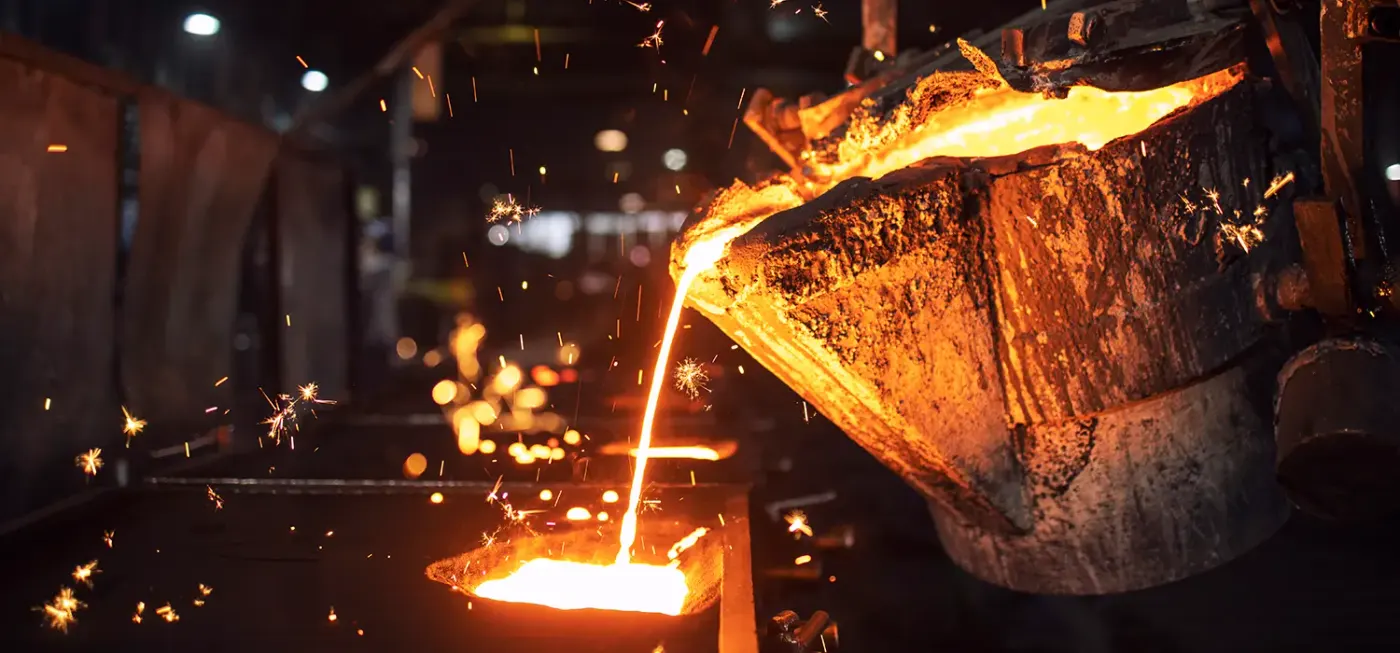
A precision metal parts manufacturer required a fully automated defect detection system to eliminate human errors in quality checks across casting and forging lines. Their challenge was to catch surface defects early—without relying on manual inspection or internet-based cloud processing.
Problem statement
Our solution
Kelectron Technologies designed a fully integrated Edge-AI inspection unit with the following architecture:
| Layer | Component |
| Hardware | NVIDIA Jetson Nano + HD industrial camera + LED ring light |
| AI Model | CNN-based custom defect classifier (trained on 10k+ labeled defect images) |
| Software Stack | Python, OpenCV, TensorFlow Lite |
| Edge Deployment | On-device image capture, real-time inference < 200ms |
| Connectivity | Local dashboard + USB/RS485 alerts to PLC |
Custom Dataset Preparation: We helped the client label 10,000+ real defect images using a semi-automated annotation tool.
Model Training: We trained a deep learning model (CNN) to detect over 7 defect classes including surface cracks, blowholes, and overfill.
Model Optimization: Converted the model to TensorFlow Lite for fast edge inference on Jetson Nano.
System Integration: Camera + Jetson Nano + custom enclosure for factory floor installation.
Alerts & Logging: Defect images logged locally and flagged in real time to the operator via PLC buzzer/relay.
Results & Benefits
Results as reported on this client project. Outcomes vary with each plant, process and data set.
Technologies used
A precision metal parts manufacturer required a fully automated defect detection system to eliminate human errors in quality checks across casting and forging lines. Their challenge was to catch surface defects early—without relying on manual inspection or internet-based cloud processing. Manual quality checks were slow, inconsistent, and error-prone, especially across 3 shifts. Visual defects like cracks, underfill, blowholes, and shrinkage were sometimes missed or misclassified.
Kelectron Technologies designed a fully integrated Edge-AI inspection unit with the following architecture: Hardware: NVIDIA Jetson Nano + HD industrial camera + LED ring light; AI Model: CNN-based custom defect classifier (trained on 10k+ labeled defect images); Software Stack: Python, OpenCV, TensorFlow Lite; Edge Deployment: On-device image capture, real-time inference < 200ms; Connectivity: Local dashboard + USB/RS485 alerts to PLC.
99.3% detection accuracy achieved in production line. Detection speed < 200ms per part, enabling inline inspection at conveyor speed. Reduced false accept rate by 90%, eliminating manual judgment errors. Offline-capable: Zero reliance on internet/cloud, enabling 24/7 uptime. Easy scaling: Each unit is standalone; client plans to deploy 12 more units.
Hardware: NVIDIA Jetson Nano, Logitech Industrial Camera, LED lighting. Software: Python, TensorFlow, OpenCV, Flask dashboard. AI: Convolutional Neural Networks, Image Augmentation. Protocols: RS485, USB Serial, Local Web Interface.
More case studies
A multi-line manufacturing facility sought to digitize its operations by capturing real-time data from machines, electrical panels, and the shop-floor
Read more →A multi-unit industrial complex needed a centralized energy monitoring solution to track real-time power usage across its electrical distribution
Read more →A proprietary trading firm specializing in foreign exchange (FX) markets approached Kelectron Technologies to build a high-frequency trading (HFT) engine
Read more →Tell us about your plant, product or platform. Our engineers will review it and get back to you.